
Workplace stress regulation is typically approached as a psychological challenge. Organizations invest in resilience workshops, mindfulness sessions, and mental health awareness campaigns. These initiatives are well intentioned and often useful, but they are built on an incomplete model of what stress actually is.
The body does not experience stress as an abstract concept. It experiences it as a physiological event. Hormones shift. Heart rate increases. Muscles contract. The nervous system changes state. These responses occur whether a person intellectually understands their stress or not.
In many workplaces, the assumption is that if employees can interpret stress differently, they will manage it better. Cognitive reframing, emotional intelligence training, and counselling programmes all rest on this premise. Yet burnout rates continue to rise across industries.
The gap lies in how stress accumulates in the body. Regulation is not simply about thinking differently about pressure. It is about how effectively the nervous system can return to balance after exposure to it. Without training this physiological capacity, organizations are asking employees to cope mentally with stress their bodies have not learned to regulate.
Understanding stress regulation in the workplace therefore begins with understanding the body itself.
Why Workplace Stress Regulation Fails Without the Body

Stress is fundamentally a nervous system response. When the brain perceives a challenge or threat, the autonomic nervous system activates the sympathetic branch — the system responsible for mobilising the body for action.
Adrenaline increases heart rate and blood pressure. Cortisol mobilises glucose so the body has immediate access to energy. Breathing becomes faster and shallower. Muscles tense in preparation for movement. These changes evolved to support survival during short bursts of danger.
In modern workplaces, however, the triggers for this response are rarely physical threats. Deadlines, interpersonal conflict, financial pressure, and cognitive overload activate the same physiological system. The body reacts as if it must prepare for action, even though the individual may remain seated at a desk.
This is where stress regulation in the workplace becomes critical. The nervous system is designed to oscillate between activation and recovery. After the sympathetic response, the parasympathetic system should bring the body back into a regulated state.
When this cycle functions properly, stress responses remain adaptive. The problem emerges when activation is frequent but recovery is limited. Cortisol levels remain elevated, sleep quality declines, and the nervous system begins to operate in a chronically heightened state.
Research consistently demonstrates the physiological cost of prolonged stress exposure. The World Health Organization recognises chronic workplace stress as a major factor in burnout, characterised by exhaustion, reduced professional efficacy, and mental distance from work.
From a physiological perspective, burnout is not sudden. It develops when the body’s regulatory systems remain under strain for extended periods.
Why Cognitive Tools Alone Are Not Enough

Many corporate wellness initiatives attempt to address stress through education and cognitive skills. Employees are taught mindfulness techniques, encouraged to reframe negative thoughts, or offered access to therapy and coaching.
These tools are valuable. They improve awareness and can change how individuals interpret demanding situations. Cognitive strategies can reduce unnecessary emotional escalation and improve communication under pressure.
However, they primarily operate at the level of interpretation. They influence how stress is understood rather than how it is physically processed.
The body maintains its own record of repeated activation. Each stressful interaction, unresolved conflict, or period of sustained workload leaves a physiological trace. The nervous system gradually adapts to this pattern, often settling into a baseline state of heightened alertness.
This phenomenon can be described as accumulated dysregulation. Burnout is rarely the result of a single overwhelming moment. More often, it is the endpoint of thousands of small stress responses that were never fully resolved.
An employee may intellectually recognise that a deadline is manageable. They may have the emotional vocabulary to describe their pressure accurately. Yet their heart rate may remain elevated, their sleep disrupted, and their concentration impaired because the body itself has not returned to equilibrium.
Workplace stress regulation becomes critical therefore requires more than cognitive insight. It requires rebuilding the body’s capacity to move between activation and recovery with greater efficiency.
Without addressing the physiological layer of stress, organisations risk treating symptoms rather than the underlying mechanism.
Stress Regulation in the Workplace as a Trainable Capacity

Regulation is not a personality trait. It is a physiological capacity that can be developed through repeated exposure to specific forms of physical training.
The nervous system learns through experience. When the body practices controlled activation followed by deliberate recovery, it gradually becomes more efficient at regulating itself. Over time, the threshold for overwhelm increases, and the return to baseline becomes faster.
This principle is familiar in physical conditioning. Strength training improves muscle resilience through progressive stress and recovery. Cardiovascular training improves oxygen utilisation through repeated demand on the heart and lungs.
The same principle applies to stress regulation in the workplace.
At Duality, regulation is approached as a skill that must be trained physically, not merely understood conceptually. Employees are introduced to embodied methods that teach the nervous system how to detect and respond to internal signals before stress escalates into fatigue or burnout.
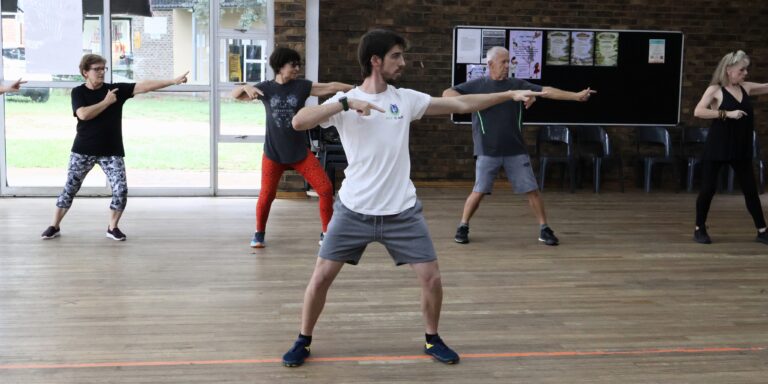
One particularly effective modality is Tai Chi. While often misunderstood as a gentle exercise, Tai Chi systematically develops interoception — the ability to sense subtle changes within the body. This includes awareness of breathing patterns, muscular tension, posture, and shifts in nervous system state.
Interoception allows individuals to recognise early markers of stress long before they manifest as exhaustion or emotional volatility. When someone can detect the first signs of physiological activation, they can apply regulatory strategies while the nervous system is still responsive.
The slow, deliberate movements of Tai Chi also strengthen parasympathetic activation. Breathing deepens. Muscle tension releases. The nervous system practices returning to a state of calm while remaining alert and functional.
Over time, this process changes how individuals respond to pressure at work. Stressful events still occur, but the body’s reaction becomes more controlled and shorter in duration. Regulation becomes automatic rather than effortful.
The aim is not to eliminate stress. Pressure is an inevitable component of meaningful work. The objective is to ensure the body can process that pressure without accumulating long-term physiological strain.
What This Means for Your Organisation

For HR managers and corporate wellness leaders, stress regulation in the workplace has direct operational implications.
When employees operate in a chronically dysregulated state, cognitive performance declines. Decision-making becomes reactive rather than analytical. Attention narrows, creativity drops, and collaboration becomes more difficult.
Workplace stress regulation becomes sustainable when employees learn how to restore balance at the level where stress actually occurs — in the body itself.
Physiological strain also influences behaviour beyond the desk. Chronic stress increases absenteeism, contributes to long-term health conditions, and accelerates employee turnover. These outcomes have measurable financial costs for organisations.
Conversely, employees with well-regulated nervous systems tend to display greater cognitive flexibility and emotional stability. They recover more quickly from demanding periods and maintain consistent performance under pressure.
Importantly, this does not require eliminating challenging workloads. It requires equipping employees with the physiological capacity to handle them sustainably.
This is where corporate wellness programmes often miss the mark. Initiatives focus on information rather than regulation. They explain stress but rarely train the body to process it.
Organisations that wish to address stress at its root must integrate physiological regulation into their wellness strategy. This means providing employees with structured opportunities to develop the skills that allow the nervous system to reset effectively.
When stress regulation becomes part of workplace culture, the benefits extend beyond individual wellbeing. Teams become more resilient, communication improves, and sustained performance becomes more realistic in high-demand environments.
What Sustainable Stress Regulation Really Requires
The conversation around workplace stress often begins with mindset. Organisations ask how employees can think differently about pressure, interpret challenges more positively, or develop greater emotional awareness.
These efforts are useful, but they address only part of the equation.
Stress is not just a mental experience. It is a physiological process that leaves measurable effects on the nervous system. Without training the body to regulate itself, intellectual insight alone cannot resolve the accumulated strain of modern work.

For organisations investing in wellness, this distinction matters. Programmes built solely around education or reflection may improve awareness while leaving the underlying physiology unchanged.
Stress regulation in the workplace becomes sustainable when employees learn how to restore balance at the level where stress actually occurs in the body itself.
Once that capacity improves, many of the behavioural and performance issues associated with burnout begin to resolve naturally.
Let’s Talk About What Your Team Actually Needs
If your organisation is rethinking how it approaches stress regulation in the workplace, Duality Fitness can help. Our corporate wellness programmes are built around physiological regulation and sustainable performance.
Get in touch at info@duality-fitness.com.